Mastering the Pruning Shear
The anatomy of the perfect cut and the heirloom hand tools that make it possible.
There is an undeniable intimacy in hand tool gardening. When you grasp a trowel, the distance between your intention and the earth vanishes. You feel the moisture levels, the root density, and the stone blockages directly through the handle.
The Bypass Pruner: A Gardener's Scalpel
Unlike anvil pruners, which crush stems against a flat block, bypass pruners operate exactly like scissors. A sharpened, curved blade sweeps past a thicker unsharpened blade, executing a surgically clean slice. This clean cut is vital for plant health; crushed stems invite disease and rot, whereas a clean bypass cut heals rapidly.
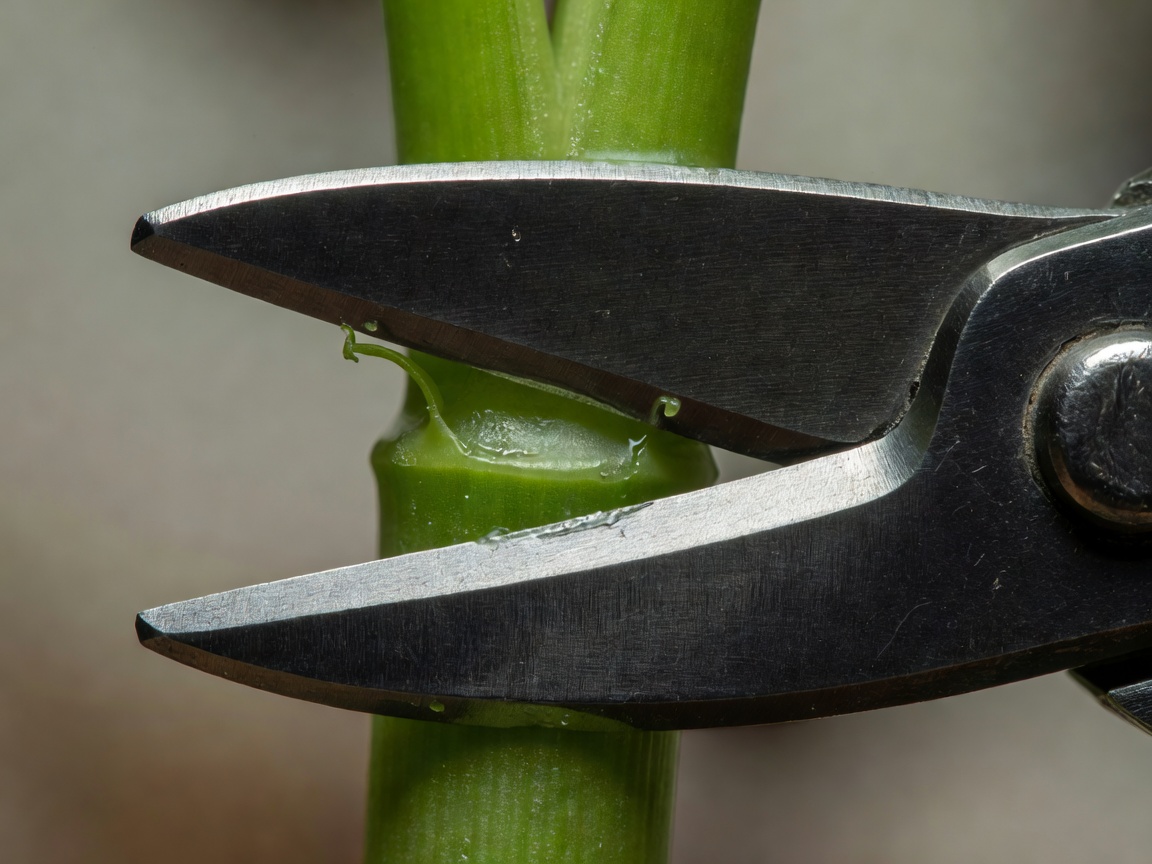
When selecting a pruner, we prioritize high-carbon steel. While it requires a modicum of maintenance—a wipe of oil after use—it holds an edge exponentially longer than stainless alternatives. Brands forged in Switzerland and Japan dominate this space, offering replacement parts that guarantee the tool can be inherited by the next generation.
The Hori Hori: The Indispensable Companion
Translating roughly to "dig dig" in Japanese, the Hori Hori soil knife is arguably the most versatile hand tool in the shed. Featuring a concave blade, a serrated edge for slicing through stubborn root crowns, and a straight edge for traditional cutting, it replaces the need to carry a separate trowel, knife, and measuring stick (as most feature depth markings on the blade).
Evaluating Handle Materials
-
FSC Certified Ash Wood
Traditional, naturally shock-absorbing, and gains a beautiful patina over decades of use with the natural oils from your hands.
-
Forged Aluminum
Incredibly lightweight, completely rust-proof, and favored for high-repetition tasks like vineyard pruning where wrist fatigue is a concern.